Tuesday, 18 May 2010

The Winning Mindset


Congratulations to Laurence Halsted and Chrystall Nicoll on their respective bronze medals in Tokyo and Koblenz – it’s great to see team mates doing so well and it also raises the bar for the rest of us to follow suit. I definitely feel inspired by their performances and want a taste of their glory! They received coverage of their results on the BBC website which is nice to see, and rightly so. Fencing is gaining in respect and exposure in the national press and it will only improve in the build up to 2012. Here is the link for it: http://news.bbc.co.uk/sport1/hi/fencing/8687701.stm

This is the best international season British Fencing have had so far and as Chrystall says in the BBC sports section, she now ‘expects’ the best from herself. Before, we were members of an underdog team, and too many times we were edged into defeat because we didn’t ‘expect’ to win. Now that British Fencing has developed a winning mindset & has grown in confidence and in strength, I cannot see us losing momentum. I am sure that this shift in mindset will deliver results.

Asian travels


Last week I came back from a 10 day trip to Shanghai and Seoul after fencing in respective World Cup and Grand Prix competitions. It was a positive trip in many ways, and I was really happy with our team performance. As a team, we’re not often in the same place at one time, and we learned a lot from being together and fencing over a longer period of time than we usually get in Europe. It allowed us the chance to develop and grow stronger as a team.
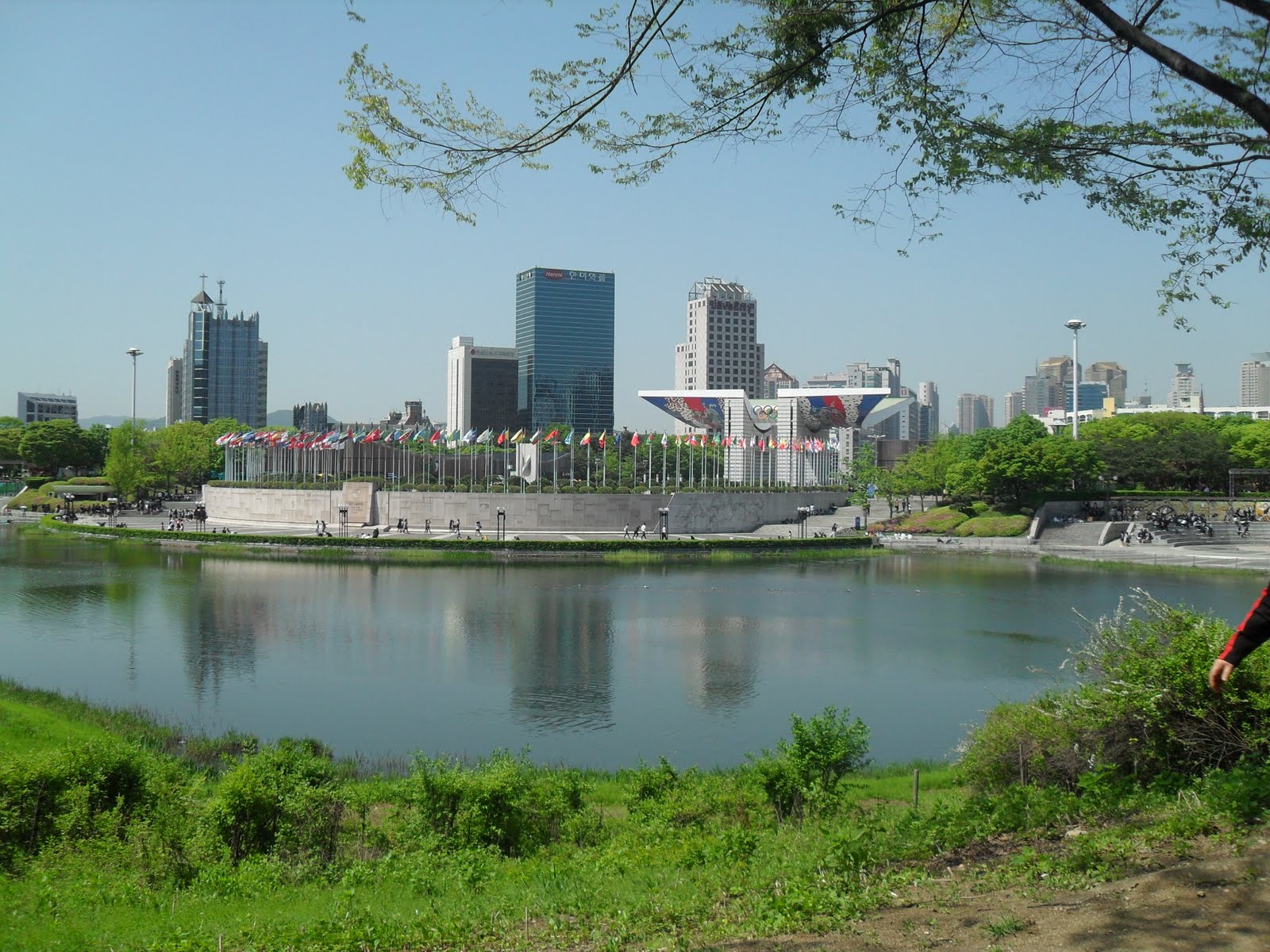
I really enjoyed being in Asia. We arrived in China as it was welcoming the world to the Shanghai Expo. Beautiful lights adorned the main streets and needless to say, the view from my hotel room on the 13th floor was quite special! The Expo began the day we arrived and will run on over the next six months. I must admit, I enjoyed Shanghai a great deal more this time around. When I first visited with the team in 2007, I found the place abrasive and difficult to make sense of. This year, however, with the preparations for the Expo in full swing and a collective effort to make tourists and foreigners feel welcome, I sensed a definite change. Everybody was warm and hospitable and restaurants and shops were much more accessible. We had some wonderful meals in China and I particularly enjoyed the Korean BBQ’s in Seoul... although here’s hoping we weren’t eating dog meat!

BBC 1 News


Hello everybody! I’m finally back and updating my blog... I wanted to post a blog about the news piece I did for BBC 1 on 26th April. It was a piece that tied in well with my Evening Standard article about funding cuts and their consequent danger to the development of grass roots sports. Click on the link below and check out Adrian Warner's blog which features a video of the news clip:
http://www.bbc.co.uk/blogs/adrianwarner/2010/04/why_do_2012_hopefuls_need_to_e.html
I was delighted to hear that it had been televised on BBC 1 numerous times throughout the day. I had no idea it would get so much coverage and I am grateful for that. It helps create awareness and encourage people to debate and acknowledge the issue. I know there are many athletes in the same position as me who are having to go down the private sponsorship road and so, it is uplifting to see my story out there for people to discuss.
I had great fun working alongside Adrian Warner (BBC London’s Olympics Correspondent) for the day. He was extremely supportive of fencing and is fed up of seeing mainstream sports such as football steal all the limelight. He seemed genuinely interested in reporting on fencing and backed up my non-elitist convictions regarding the sport... now there’s cause for another news piece! Pushing my luck? Yeah. Probably!
All in all, it was a positive day and experience. I feel heartened by the amount of support and generosity people have shown me over the last year or so, and I am once again particularly grateful to all of my sponsors. I will try hard to justify your faith in me over the next couple of years.
Also, thanks to Graham Watts (British Fencing’s performance director) who gave an excellent interview at short notice. I think it was important to have him there, and he made a positive difference to the feature. I know my dad’s cameo appearance was also appreciated by many!

Wednesday, 31 March 2010

"If you screw things up in tennis, it's 15-love. If you screw things up in boxing, it's your ass."


Last week I started boxing! I wanted to do a different sport as an aside from fencing to keep my brain stimulated in other ways and avoid getting stale. I chose boxing because of its similarities to fencing. The footwork is largely similar except that whereas fencing footwork is linear, in boxing you need to move in all directions. Like fencing, you need to have quick reactions, and a tactical brain that can outwit your opponent.

I came back buzzing from my first session. It is an unforgiving sport where your brain must be engaged from start to finish or you risk receiving a nasty little surprise to your ribs or chin! I haven't felt that buzz or sense of engagement in any other sport other than in fencing. It forces you to sharpen your concentration as well as your thinking power. The boxing trainer I saw explained that boxing is all about confidence - hesitate or cower away at any given moment and you’re dead. Although I do not intend to actually get in the ring, I think boxing will help with my confidence and increase my competitive edge. I am already looking forward to the next session!

BBC Radio 5 Live


This month I would like to centre my blog around an interview that I gave a week ago on the BBC 5 Live Show with Tony Livesey. I really enjoyed representing fencing on the live show. I thought the format was fun, and on listening to the show again I feel that the discussion was relaxed and it gave us a chance to get fencing out there on live national Radio.

Despite the surprise and unscripted negative angle given to fencing by one of the participants, I believe some serious points were raised; not least that fencing is perceived as an elitist sport and whereas it may be an exciting sport to participate in, it is perceived as not being a spectator sport.

Although relatively few people do fencing as a sport in Great Britain, in my experience this does not necessarily mean that participants come from elite backgrounds (mostly Public Schools). Indeed, throughout my time in fencing, be it at my club, during domestic and international competitions, or whilst coaching children in the North East of England while at university, I have mixed with people from all backgrounds who have in common their fascination for this exciting and challenging sport.

I feel really strongly about defending fencing against accusations that it is an elitist sport as it is simply not true. I was discussing this with a friend the other day and she pointed out that most sports are elitist to some extent. Look at rowing or horse-riding for instance. They are both watched and enjoyed by millions of spectators but aren’t necessarily the most accessible of sports to the general public. Even tennis is becoming a relatively closed sport, reserved for the financially secure as court hire denies access to many working class families.

My point is that fencing isn’t necessarily more costly or inaccessible than any other regular sport; it simply has an elitist label attached to it from an era where fencing was a gentleman’s sport. My personal goal is to spend some time presenting fencing in schools and break away from the age-old image of the wealthy gentleman's pursuit. I am convinced that schools are an important recruiting ground for fencing whether they be private or state. It was at school that I started and where my passion for the sport was ignited.

Transforming fencing into a media friendly spectator sport is another thing altogether, but a question that no doubt needs to be addressed in the run up to the London Olympics and beyond. As far as making fencing more spectator-friendly, I think it needs knowledgeable commentators and enthusiasts to sell the sport. There are many sports that I watch where I have little understanding of what is going on but I can still appreciate them. Ultimately the test will be whether fencing can be accepted as a televised sport. Presentation will be all important.

Fencing is currently receiving much more exposure in the British press than it used to in the past (check out BBC’s coverage of a men’s foil event last weekend http://news.bbc.co.uk/sport1/hi/scotland/8595806.stm ) and received more mainstream media attention at the Beijing Olympics than in previous years. I can only hope that people will give fencing a chance before judging it based on common misconceptions.

Monday, 15 February 2010

Onwards and Upwards


I took great pleasure in reading ‘Sport’ magazine with Jonny Wilkinson as guest editor last week. I’ve always admired his professionalism, dedication and sense of intent. He simply never gives up. Despite critics and an endless succession of injuries, time and again, he picks himself back up.
Like all great sportsmen, he’s a perfectionist, and let’s face it, a little obsessive. But no-one can criticise his innate drive to get back fit and on the field again. He has constant faith. I’ve always admired that. It takes a lot to keep fighting on and literally smash through challenges.

The hardest part of sport is that, for all those immensely gratifying moments, you will experience defeat. But sport, as Jonny Wilkinson himself says, is a world of extremes and opposites - for there to be joy and success, you have to experience frustration and disappointment.

And so how do you keep on going when things aren’t going your way? You re-evaluate, re-group and have constant faith. If you have that instinctive drive and self-belief, surely your intent will be so well meaning that success will never be far away. And if not, then at least you know that there can be no regrets.

In my opinion, it takes heart and courage to keep pushing on through injury or setbacks. This weekend I had a pretty awful weekend with my fencing, it didn’t go my way and I must admit it was difficult walking into training with a smile on my face today. But I know that I cannot waste time dwelling on it, I need to confront it and move on.

Sometimes you don’t know just how performing and how powerful you can be until you have experienced the rawness of defeat or until you meet a big enough challenge. Just last weekend I had to fence the no.8 in the world and I stepped up to fence probably one of my best fights to date.

Countless athletes surpass themselves when all the odds are against them, why is that? Because the situation demanded it.

What is my point here?

NEVER SAY DIE.

Thursday, 11 February 2010

Lloyd & Partners


To round up a rather long and cold, dreary January, I finished on a high and participated in a fencing demonstration for Lloyd & Partners – British Fencing’s new official partner. I had the honour of being asked to be ambassador for L&P on behalf of British Fencing and was proud to see that L&P had committed to supporting the British Fencing Team in the run-up to the 2012 Olympics.

It was a wonderful evening and opportunity to showcase our sport to the fullest. We had GB representatives from all three weapons and took it in turn to fence our respective weapon. Champagne and canapés were flowing freely (amongst the guests and not the athletes, of course!) and fun was had by all.
I have attached some photos of the evening’s fencing and would like to thank Lloyd and partners once again for their generosity and support.
Often the difference between winning and losing in fencing is minimal, and the reason on any particular day can come from any one of the following: fitness, technique, mental/tactical strength, nutrition, hydration and more. All of these things have to be worked on in order to achieve success, and that inevitably costs time and money. An elite athlete cannot hope to succeed without proper financial and moral support. And so thank-you Lloyd and Partners, your support means a lot.